
From Raw Acetate Sheet to Finished Frame: How Acetate Glasses Are Made
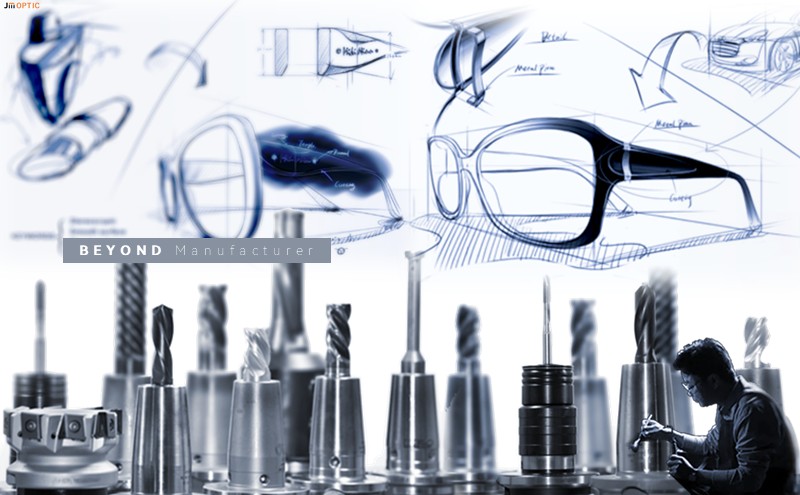
A behind-the-scenes look at the 7-step acetate eyewear manufacturing process — for buyers who want to understand what they’re paying for.
Quick answer: Acetate glasses are made through a roughly 7-step process that transforms raw cellulose acetate sheets into premium eyewear frames. Actually there are many more details small steps in this 7-step process. Simply speaking, the journey begins with material selection — choosing high-quality acetate sheets from established suppliers like Mazzucchelli or JINYU, JIMEI — and progresses through precision CNC cutting, barrel tumbling for 72 hours, hand polishing, assembly, and rigorous quality inspection. At JM Optical, we oversee this entire process at our factory in Wenzhou, ensuring every frame meets CE, FDA, and ISO quality standards. Understanding how acetate glasses are made helps buyers set realistic lead times — 7 days for ready stock, 60–90 days for custom OEM production — and evaluate supplier capability.
If you sell acetate glasses, you’ve probably been asked: “Why does it take so long?” or “Why is acetate more expensive than plastic?” The answer lies in the manufacturing process. Unlike injection-molded frames that pop out of a machine in seconds, each acetate frame is individually cut, shaped, polished, and assembled — a process that takes days, not minutes.
📌 This is Part 1 of our Production & Material Deep Dives series, designed to run alongside our B-type product collection articles. For sourcing-focused guides, see our How to Source Eyewear from China series (Parts 1–11).

1. What Is Acetate? Understanding the Raw Material
Before diving into the manufacturing process, it’s worth understanding what acetate actually is. Cellulose acetate is a plant-based thermoplastic derived from wood pulp and cotton fibers. Unlike petroleum-based plastics, acetate is renewable, hypoallergenic, and can be produced in virtually unlimited color combinations through layering, marbling, and block-cutting techniques.
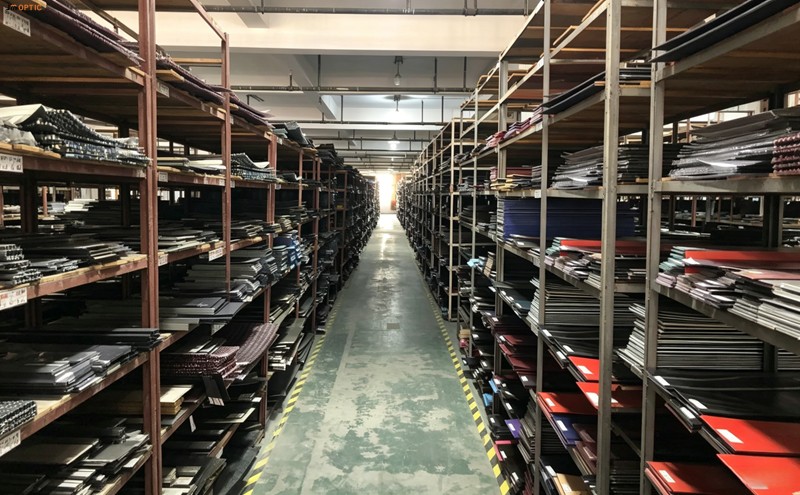
The acetate used in eyewear manufacturing comes in large sheets, typically 150mm × 60mm × 4–8mm thick. These sheets arrive at our Wenzhou factory in carefully curated color batches. A single sheet can produce roughly 8–12 frames, depending on the design complexity and frame size.
Key properties that make acetate the material of choice for premium eyewear:
- Rich color depth — acetate absorbs dye throughout the material, not just on the surface
- Adjustability — acetate softens with heat, allowing opticians to customize the fit
- Hypoallergenic — unlike some metal alloys, acetate won’t cause skin reactions
Durability — high-quality acetate frames can last 5+ years with proper care
2. Step 1: Material Selection & Quality Inspection
The quality of acetate glasses starts with the acetate sheet itself. Not all acetate is created equal — premium sheets from Italian and Chinese mills offer better color consistency, fewer internal imperfections, and superior polishing behavior compared to budget alternatives.
At JM Optical, our incoming inspection process includes:
- Color matching against the approved Pantone or physical sample under D65 standard lighting
- Thickness measurement across the entire sheet — variation must be within ±0.15mm
- Internal flaw detection — backlight inspection to catch bubbles, streaks, or foreign particles
- Material certification verification — confirming the sheet’s composition, UV stability, and compliance with REACH/CE requirements
Any sheet that fails this inspection is rejected before it ever reaches the cutting station. This upfront discipline is what separates consistent suppliers from those that deliver variable quality.
3. Step 2: Cutting the Acetate Sheet
Once approved, the acetate sheet moves to the cutting station. A template — essentially a metal guide shaped like the frame front — is placed on the sheet, and a band saw or hydraulic cutting press removes the rough outline. This is not precision work yet; it’s about efficiently separating usable blanks from waste material.
A few technical considerations during cutting:
- Grain direction matters — acetate has a subtle grain that affects structural strength; frames are cut along the strongest axis
- Pattern alignment — for layered or marbled acetate, the cut position determines how the pattern appears on the finished frame
- Waste optimization — experienced cutters arrange templates to minimize offcut, typically achieving 75–85% material utilization
The rough blanks that emerge from this stage are oversized by approximately 3–5mm on all edges, leaving room for the CNC milling that follows.
You can see more detailed Acetate Sheet Cutting & Pre-Processing by click below link of our production video on YouTube
4. Step 3: CNC Milling & Precision Shaping
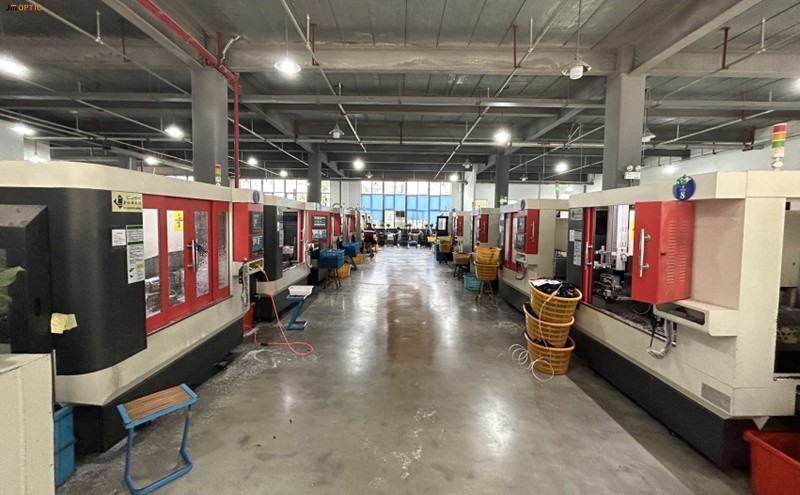
This is where the frame takes its true shape. CNC (Computer Numerical Control) milling machines carve the acetate blank into the precise 3D geometry defined by the design file. A typical acetate frame goes through 2–3 CNC passes:
- Rough pass — removes bulk material quickly using a larger cutting tool
- Finish pass — uses a fine tool to achieve the final surface quality and dimension accuracy to ±0.1mm
- Detail pass — cuts the lens groove, bridge contours, and decorative elements
The CNC program for each frame model is custom-developed during the sampling phase. Once perfected, it’s stored digitally and reused for every production batch, ensuring frame-to-frame consistency. At our Wenzhou factory, every batch is spot-checked against the original CAD file using a digital caliper.
You can see more detailed CNC process by click below link of our production video on YouTube https://www.youtube.com/watch?v=unoni3IVp20
5. Step 4: Drilling & Hardware Preparation
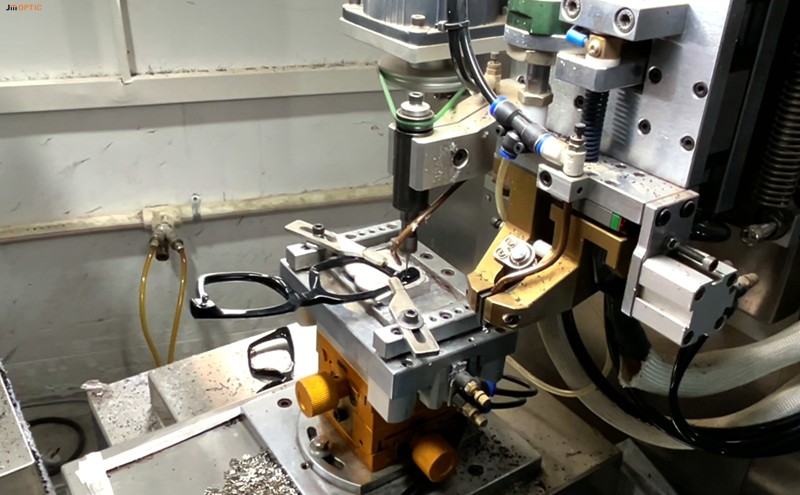
After CNC milling, the frame front and temples move to the drilling station. Precision drilling creates the holes for hinge screws, rivets, and temple mounting. A typical acetate frame requires 6–10 precisely positioned holes.
Tolerance here is especially tight — a misaligned hinge hole by even 0.2mm can cause the temple to sit crooked or the screw to strip over time. Our technicians use jig-guided drills and laser alignment markers to maintain hole positioning accuracy.
At this stage, the frame is also checked for:
- Lens groove consistency — the groove must hold lenses securely without gaps
- Symmetry — left and right sides measured and compared against the original design spec
6. Step 5: Polishing — The Multi step Finishing Process
Polishing is arguably the most time-consuming and skill-dependent step in how acetate glasses are made. It’s also what gives premium acetate frames their signature deep gloss and silky touch. At JM Optical, our polishing process takes approximately 3 days from start to finish and combines two distinct techniques:
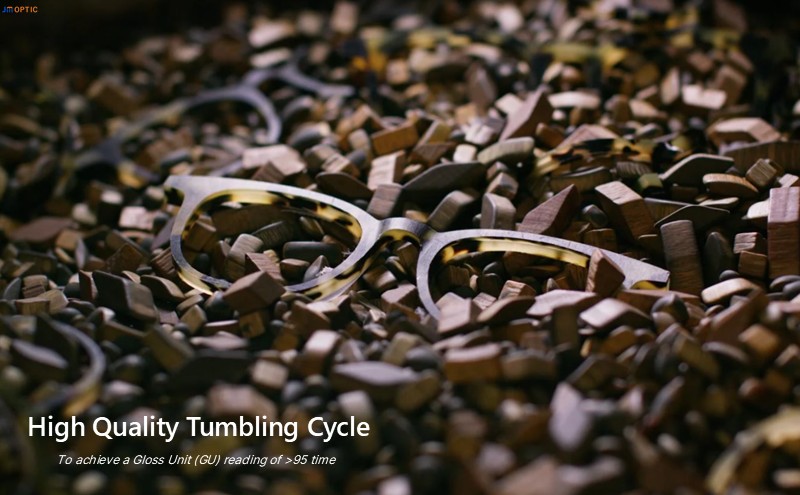
Barrel Tumbling (72 Hours)
The frame fronts and temples are loaded into large rotating drums filled with a mixture of wooden pegs, bamboo chips, and polishing compound. The frames tumble continuously for 72 hours in different drums. As the drum rotates, the polishing media gently abrades every surface — even the hard-to-reach inner edges of the bridge and temple curves. This is the same technique used to polish high-end metal eyewear, adapted for acetate.
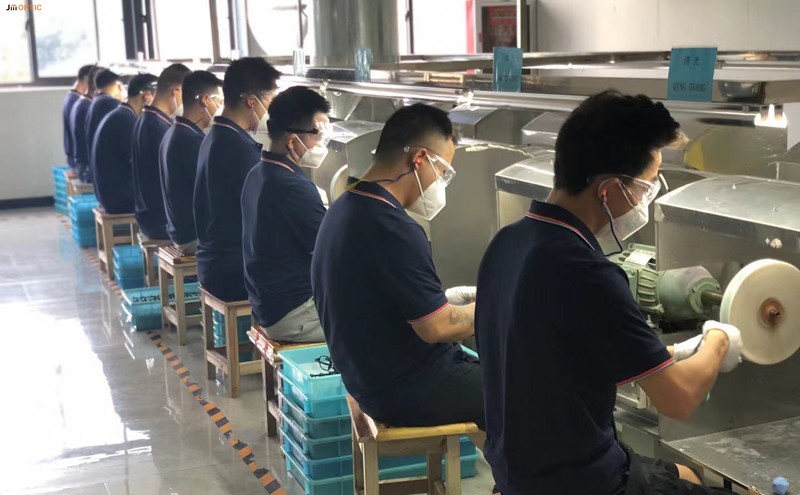
Hand Polishing
After barrel tumbling, each frame is individually hand-polished by an experienced technician using progressively finer buffing wheels and polishing paste. The technician works systematically through every surface — front, back, edges, and inner corners — applying just enough pressure to bring out the gloss without overheating the acetate (which can cause warping).
The result is the smooth, lustrous finish that distinguishes well-made acetate glasses from mass-produced alternatives. It’s also why acetate frame production cannot be rushed — skip the barrel tumbling step, and the frame will feel rough in the customer’s hands.
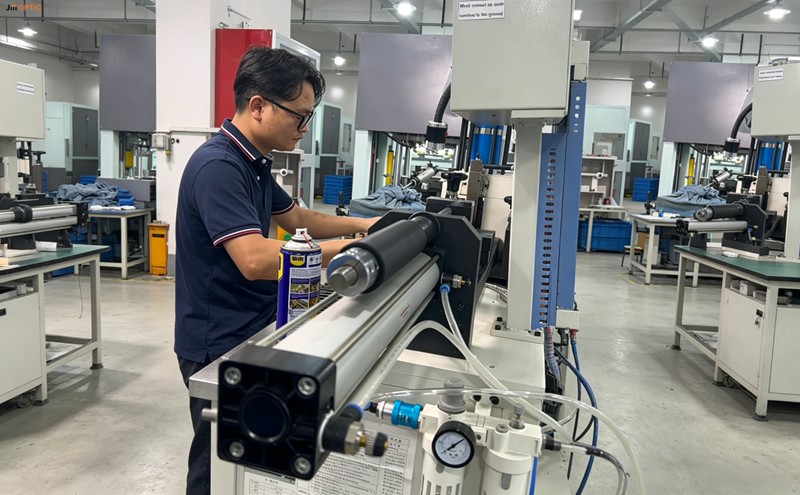
7. Step 6: Assembly & Hinge Attachment
With polishing complete, the frame enters assembly. Temples are attached to the frame front using precision hinges — typically spring hinges, standard barrel hinges, or screw-mounted flex hinges depending on the design.
Assembly is where the frame becomes functional:
- Hinge screws are inserted with thread-locking compound to prevent loosening over time
- Spring hinges are tested for consistent tension — they should open smoothly and snap back without excessive force
- Temple tips (ear pieces) are fitted — these are typically acetate, TR90, or silicone depending on comfort requirements
- Nose pads are attached when the design calls for pad arms (though many acetate frames use integrated nose bridges)
Each assembled frame receives a temporary demo lens to maintain shape during shipping and handling.
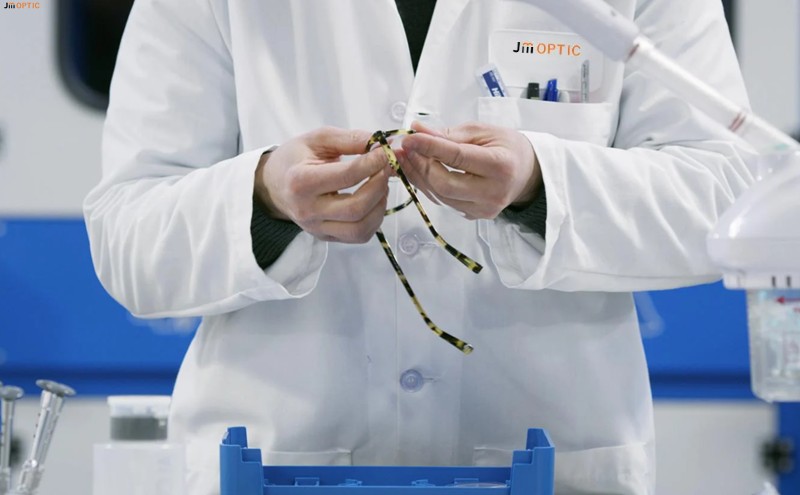
8. Step 7: Quality Control & Final Inspection
The final step in how acetate glasses are made is the most important for buyers: quality control. At JM Optical, our QC process follows a 5-point inspection system:
- Visual inspection — checking for visible defects under standard D65 lighting
- Dimensional verification — measuring key dimensions (frame width, bridge, temple length, lens size) against the spec sheet
- Functional test — opening and closing temples 20+ times, checking hinge tension, screw tightness
- Stress test — gently flexing the frame to verify structural integrity and memory (acetate should return to shape)
- Packaging prep — cleaning, inserting demo lenses, and packing in JM Optical standard packaging with CE marking
Frames that fail any checkpoint are either reworked (if the issue is minor, like a polishing scuff) or scrapped (if the issue is structural). Our standard AQL (Acceptable Quality Limit) for bulk orders is 2.5 — meaning we accept no more than 2.5% minor defects per batch, and zero critical defects.
9. Why Acetate Frame Manufacturing Takes Time — and Why It’s Worth It
Now that you understand the full process, it’s clear why acetate frame production has a longer lead time than mass-market plastic frames. The 5-day polishing alone accounts for many days of the production cycle. When you add material curing (acetate sheets need to be aged before cutting), CNC programming, assembly, and QC, a typical custom batch requires 25–35 working days just to produce the frames.
This timeline extends to 60–90 days for OEM orders that include engineer research and drawing, new mold development, custom color matching, and the mandatory sampling-and-approval cycle. That said, buyers who plan ahead benefit from the reliability of a proven manufacturing process and consistent quality across repeat orders.
For ready-stock buyers, JM Optical maintains an inventory of popular acetate styles that can ship in as little as 7 days — ideal for retailers testing new styles or needing quick restocks.
10. FAQ
Q: What’s the difference between injection-molded plastic frames and acetate glasses?
A: Injection-molded frames are made by injecting molten plastic into a mold — the process takes seconds per frame. Acetate frames are CNC-carved from solid sheets and polished over days. Acetate offers richer color depth (color is in the material, not painted on), better adjustability, and a premium feel. Injection-molded frames are cheaper but cannot match acetate’s aesthetics or durability.
Q: Why does acetate frame polishing take many days?
A: Acetate polishing requires two stages: 72 hours of barrel tumbling to uniformly smooth all surfaces — including internal curves and edges — followed by days of hand polishing for the gloss finish. Shortening this process results in rough edges, uneven shine, and a frame that feels cheap to the touch. Premium acetate glasses are worth the wait because the polishing directly determines the wearer’s comfort and the frame’s perceived quality.
Q: Can I customize the color and pattern of acetate frames?
A: Yes, custom color development is one of the key advantages of acetate. For OEM orders (MOQ 300 pcs/style or more), we can match specific Pantone colors or develop custom layered patterns. The color-mixing and layering happens during acetate sheet production — our factory team works with the sheet supplier to create samples for your approval. Color matching typically adds 2–4 weeks to the lead time but gives your brand a truly unique product.
Q: How can I verify the quality of acetate glasses before placing a bulk order?
A: We always recommend ordering samples first (sample fee applies, refundable against bulk orders). At JM Optical, samples from stock are dispatched within 7 days; custom OEM samples take 15–25 days. When you receive samples, check surface finish under good lighting, flex the frame gently, open/close the temples multiple times, and verify dimensions against your spec. A quality acetate frame should have a smooth, even gloss, consistent color, and solid hinge action.
11. About JM Optical
JM Optical (Shanghai JM Optical Co., Ltd.) is a professional eyewear manufacturer with our production facility in Wenzhou — one of China’s five major eyewear manufacturing hubs. We specialize in acetate, metal, titanium, and TR90 frames for optical, sunglass, and reading glass categories.
Our factory combines 20 years of production expertise with modern CNC milling, precision polishing, and rigorous quality control. Every frame we produce goes through the 7-step process described in this article — from acetate sheet to finished product.
We serve eyewear brands, retailers, and distributors across Europe, the Americas, and the Middle East. Whether you need ready stock (MOQ 12 pcs/color) or custom OEM frames (MOQ 300 pcs/style, 100 pcs/color), we’re here to support your business.
MOQ: 12 pairs/color (ready stock) | 300 pairs/style · 100 pairs/color (OEM/ODM custom production)
Lead time: 7 days (ready goods) | 60–90 days (OEM/ODM)
Email: jim@shjmoptical.com | WhatsApp: +86-137-6415-0962 | shjmoptical.com