
Clear Acetate Frames: The Complete Suggestion to Sourcing from China
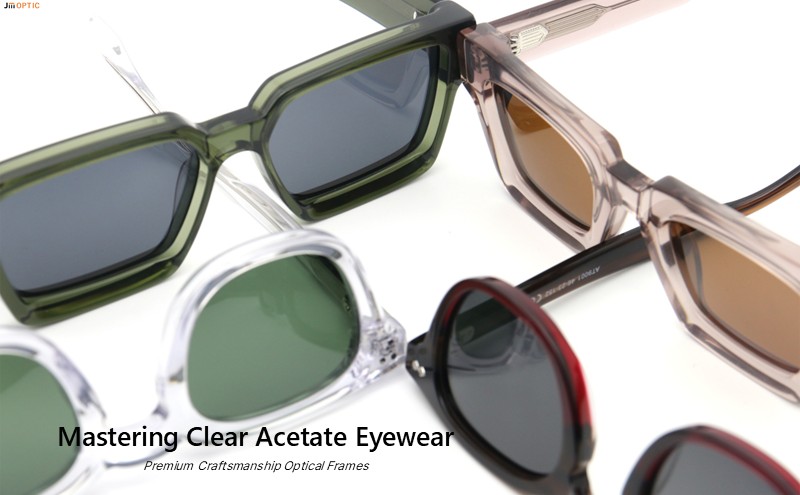
Why clear acetate frames are harder to produce than any colored style — and how to source them right.
As you may know, the transparency of the material exposes every surface defect, requires multi-stage polishing, and demands UV-stabilized raw acetate to prevent yellowing. Customers sourcing clear acetate frames wholesale from China should verify supplier polishing capability, raw material supplier, and batch color consistency before committing to production.
Clear acetate frames have become one of the most consistent sellers in the global optical market. From minimalist crystal-clear fronts to soft blush-tinted transparencies and bold tortoise-with-clear-temple combinations, clear acetate frames now span everyday optical wear, reading glasses, and high-fashion runway pieces alike.
But here is what most customers discover after received first failed samples: clear acetate frames are far more demanding to produce than other solid colors. The material hides nothing. Every scratch, inclusion, uneven polish, dirt inside wire or color inconsistency is immediately visible in clear acetate frames. What looks like a simple "no color" decision is, in production terms, one of the most unforgiving specifications you can place.
So I write this article to try to covers what customers actually need to know before sourcing clear acetate frames: the material properties, the manufacturing challenges, the quality checkpoints, and the right questions to ask any China eyewear supplier before placing a bulk order.
1. What Makes Clear Acetate Frames Different
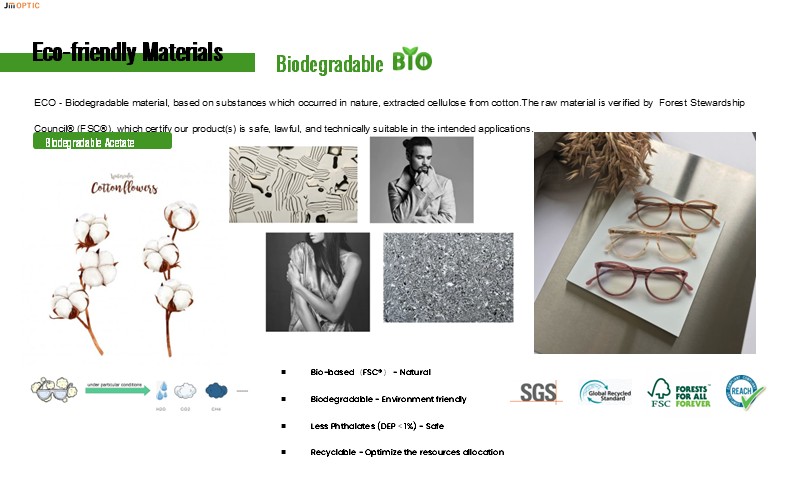
Acetate — or cellulose acetate — is a plant-based plastic derived from cotton fiber and wood pulp. It is the premium material of choice in eyewear for its rich color depth, a feel reminiscent of jade, and a surface that's less likely to cause allergic reactions. Clear acetate frames are produced by reducing or eliminating pigment content during the sheet manufacturing process. The result is a material with distinct properties that separate clear acetate frames from every other frame category in terms of production difficulty.
These material characteristics directly affect both production quality and buyer expectations for clear acetate frames:
- Visual exposure: Higher transparency in clear acetate frames means internal defects — air bubbles, uneven grain, stress marks — are visible very clearly. What is hidden in dark acetate is fully exposed in clear acetate frames.
- Greater material sensitivity: Clear acetate frames react more noticeably to heat, chemicals, and UV exposure over time than pigmented stock.
- Batch consistency pressure: Without pigment to mask variation, even minor differences between production batches are detectable when clear acetate frames are compared side by side.
- UV yellowing risk: Clear acetate frames lack UV-blocking pigments. Prolonged sunlight exposure causes a yellowing effect within months — a critical issue for markets in Southern Europe, the Middle East, and Latin America.
In nearly 20 years of producing and sourcing eyewear, we have seen more buyer complaints originate from clear acetate frames than from any other material category. The issues are almost always traceable to one of the four factors above — and almost always preventable with the right supplier selection process.

2. Product Types Within the Clear Acetate Frames Category
Customers often use "clear acetate frames" as a general term, but the category breaks down into distinct product types, each with different production requirements and commercial profiles:
- Crystal Clear (Transparent): Fully clear acetate frames with no visible color tone. The most demanding variant in terms of surface finish. Extremely popular for minimalist optical frames, particularly in European and East Asian markets.
- Translucent Solid Colors: Clear acetate frames with a solid color carrying visible light transmission — translucent grey, sage green, dusty rose, pale blue. Produces a "frosted glass" visual effect on the finished frame.
- Translucent Tortoise: The classic tortoiseshell pattern rendered in lighter, see-through tones. Brown-on-clear, amber-on-clear, or smoke-on-clear. A perennial best-seller in clear acetate frames across all demographics.
- Clear Front + Colored Temple Combination: The front is crystal-clear acetate; the temples use a contrasting solid or patterned color. Requires precise material joining at the hinge area.
- Gradient / Fade Acetate: Clear acetate frames that transition from one tone to another — for example, deep brown at the top fading to clear at the bottom. Visually striking; requires careful alignment during frame cutting.
Each product type in the clear acetate frames category carries specific production risks. A reliable clear acetate frames manufacturer should be able to explain their process for each variant — not simply give a generic quality assurance answer.
3. The 5 Manufacturing Challenges Customers Must Understand
Understanding these challenges helps you evaluate supplier capability and set realistic quality expectations before production of clear acetate frames begins. These are not theoretical — they are the five issues we encounter most frequently in sample evaluations and bulk order inspections of clear acetate frames.
Challenge 1: Surface Scratch Visibility in Clear Acetate Frames
On a dark or patterned frame, light surface scratches are invisible. On clear acetate frames, every scratch from tumbling, transport, or handling appears as a visible defect. A quality manufacturer of clear acetate frames must add dedicated soft-tumbling stages and use scratch-protective packaging from the moment the frame is cut from sheet stock. Ask your supplier: what packaging do they use between production stages for clear acetate frames? If the answer is standard bulk tumbling with no surface protection, that is a significant red flag.
Challenge 2: Multi-Stage Polish Consistency
The glass-like polish that makes clear acetate frames so visually attractive requires multiple passes through progressively finer polishing wheels. Inconsistent polish results in a hazy or "foggy" surface that customers and end consumers notice immediately on clear acetate frames. Ask your China eyewear supplier specifically: how many polishing stages do they run for clear acetate frames? Best-practice manufacturers run at least 4–6 dedicated stages for clear stock.
Challenge 3: UV Yellowing Prevention in Clear Acetate Frames
Clear acetate frames contain no UV-blocking pigments. Without proper UV stabilizer additives in the raw material, clear acetate frames can develop a yellow tint within 3–6 months of regular sunlight exposure. Always confirm with your supplier whether the acetate sheets used for clear acetate frames contain UV stabilizers — and request the raw material specification sheet. This is especially critical for customers supplying sunny-market regions.
Challenge 4: Batch Color Consistency in Translucent Clear Acetate Frames
For translucent variants of clear acetate frames, maintaining consistency across production batches is significantly harder than with opaque colors. The light-transmitting quality of clear acetate frames means even a slight variation in pigment concentration will appear as a different shade when frames are held against a light source. For reorders of clear acetate frames, always send the original approved sample back as a physical color reference standard.
Challenge 5: Internal Inclusions in Raw Sheet Stock for Clear Acetate Frames
Raw acetate sheets occasionally contain small air bubbles or particulate inclusions. In dark material these are invisible; in clear acetate frames they appear as obvious blemishes. A reliable clear acetate frames manufacturer performs incoming material inspection under a light table before cutting. Ask whether this incoming inspection step is part of their standard process — it should be non-negotiable for any clear acetate frames production order.
4. Quality Control Checklist for Clear Acetate Frames
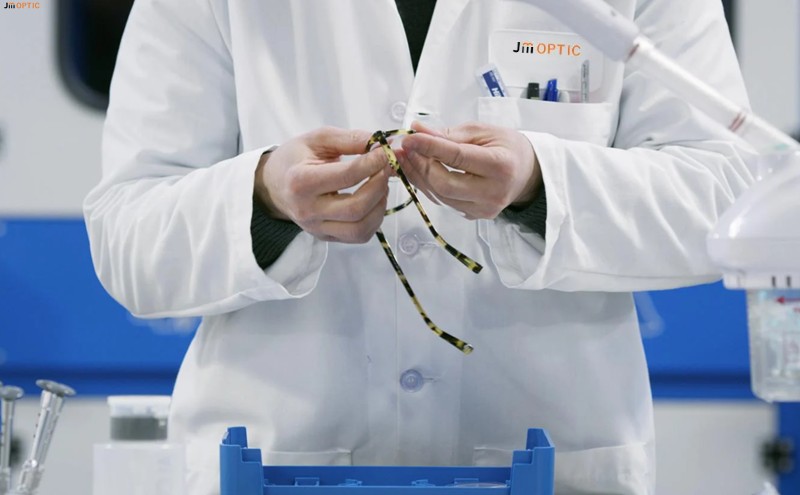
When evaluating samples or conducting quality control on a bulk order of clear acetate frames, use this structured checklist. These checkpoints address the specific failure modes that standard QC processes often miss when inspecting clear acetate frames:
Checkpoint | What to Inspect |
Surface Clarity | Hold the clear acetate frames up to a bright light. No haze, cloudiness, or internal bubbles should be visible in the body of the frame. |
Polish Uniformity | Check front, temples, inside rim, and temple tips. Every surface of the clear acetate frames should show a consistent glass-like sheen with no dull patches. |
Scratch Inspection | Examine under direct light at multiple angles. Clear acetate frames reveal scratches that are invisible on colored stock — every piece must pass. |
Color Consistency | Compare all clear acetate frames in the batch side by side under natural light. Translucent tone variation is immediately visible when pieces are grouped. |
UV Stability | For larger orders of clear acetate frames destined for sunny markets, request a UV exposure report or raw material spec confirming UV stabilizer content. |
Hinge Integration | Hinge inserts must be flush and fully sealed. On clear acetate frames, exposed metal edges or gaps around the hinge are an obvious visible defect. |
Lens Fit Precision | The inner groove of clear acetate frames must be precise. Clear lenses in a clear frame — any gap or misfit is visible to the end consumer immediately. |
Apply this checklist to every incoming sample of clear acetate frames before approving production, and again at pre-shipment inspection stage for bulk orders.
5. Sourcing Clear Acetate Frames from JM Optical
We carry an extensive range of clear acetate frames across optical, sun, and reading categories — from everyday crystal-clear shapes to statement translucent tortoise and gradient styles. Our production team manufactures clear acetate frames using acetate material sourced from established Italian supplier as well as high-grade Chinese manufacturers, specified to the buyer's requirements and budget.
- Ready stock clear acetate frames: A curated selection of clear acetate frames available for immediate shipment. MOQ: 12 pcs/color. You select from available styles — no design modifications required.
- OEM/ODM custom clear acetate frames: Custom shapes, custom color specifications, custom branding (laser engraving, temple printing, branded case and cloth). MOQ: 300 pcs/model, 100 pcs/color.
- Material sourcing transparency: We disclose the acetate sheet origin, UV stabilizer status, and batch traceability for every custom clear acetate frames order.
- Compliance documentation: CE certification, FDA listing, test reports for phthalate content and nickel release — available for all major export markets.
- Sample service: We accept sample requests before bulk commitment on clear acetate frames. Send us your requirements and we will respond within 24 hours.
Frequently Asked Questions About Clear Acetate Frames
Q1: Why do clear acetate frames cost more than colored frames?
Clear acetate frames require additional polishing stages, stricter incoming material inspection, and more careful inter-stage packaging to prevent surface scratches. The higher production complexity of clear acetate frames translates to a modest price premium versus equivalent colored styles — typically 5–15% depending on the manufacturer and order volume.
Q2: How do I prevent UV yellowing in clear acetate frames?
UV yellowing in clear acetate frames is caused by polymer degradation under ultraviolet light. The most effective prevention is sourcing clear acetate frames produced from UV-stabilized acetate sheet stock. Always ask your China eyewear supplier for the raw material specification or a UV exposure test report. For customers supplying sunny markets — Southern Europe, Middle East, Latin America — UV stabilization in clear acetate frames should be a non-negotiable requirement.
Q3: What is the minimum order quantity for clear acetate frames from JM Optical?
For ready-stock clear acetate frames, the MOQ is 12 pcs/color — no model minimum. For OEM/ODM custom clear acetate frames, the standard MOQ is 300 pcs/model with a minimum of 100 pcs/color. Sample orders for clear acetate frames are available before bulk commitment.
Q4: Can I get consistent reorders of the same translucent color in clear acetate frames?
Translucent color consistency across reorders of clear acetate frames is one of the most common challenges in this product category. We manage this by retaining physical color reference samples and working with suppliers who maintain batch records. For critical color matches in clear acetate frames, we recommend sending back your original approved sample when placing any reorder.
Q5: What acetate sheet brands do you use for clear acetate frames?
For clear acetate frames, we source from Italian suppliers (Mazzucchelli is the industry benchmark), and high-grade Chinese manufacturers like JINYU, JIEMEI etc. for cost-optimized orders. The specific source for any clear acetate frames order is disclosed on request and matched to the buyer's quality and budget requirements.
Request Clear Acetate Frames Samples or a Custom Production Quote
Interested in clear acetate frames for your retail range or brand line?
Send us your requirements — frame shape, color direction, quantity, and target market — and we'll respond within 24 hours with matching clear acetate frames options from our current stock or a custom production proposal.
jim@shjmoptical.com | WhatsApp: +86-137-6415-0962 | shjmoptical.com
About JM Optical: Based in Shanghai and Wenzhou, JM Optical is a specialized eyewear manufacturer with nearly 20 years of experience supplying independent retailers, chains, and brand customers across Europe, North America, and the Middle East. We manufacture optical frames, sunglasses, reading glasses, and blue-light eyewear — including a full range of clear acetate frames — offering both ready-stock and full OEM/ODM customization. All products are export-certified and available with CE, FDA, and market-specific compliance documentation.