
2026–2027 Global Eyewear Trend Report Part I:Aviator Eyewear – Chapter One — The Evolution of an Icon
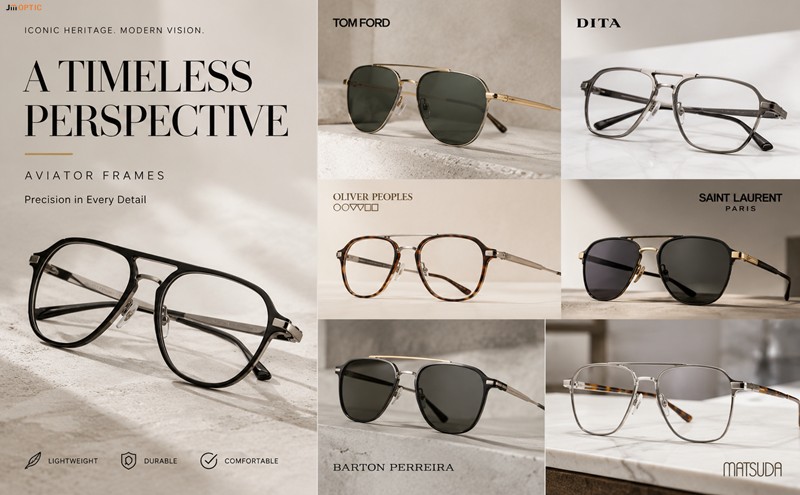
The Evolution of an Icon:
Why Aviator Frames Continue to Shape the Future of Eyewear
For nearly ninety years, the aviator frame has remained one of the most recognizable eyewear silhouettes ever created. Originally designed for military pilots in the 1930s, its distinctive teardrop shape quickly evolved from functional equipment into a global fashion icon. Today, aviator eyewear is no longer defined by a single look. Instead, it represents an entire design language that continues to inspire luxury brands, independent designers, and OEM manufacturers around the world.
As we enter 2026 and look ahead to 2027, the aviator category is experiencing one of its most exciting periods of transformation. Luxury fashion houses, premium eyewear brands, and emerging independent labels are all reinterpreting this timeless silhouette through new materials, innovative construction techniques, and contemporary proportions.
Unlike previous trend cycles that focused primarily on metal sunglasses, today's aviator collections extend far beyond their traditional identity. Designers are introducing bold acetate constructions, lightweight titanium engineering, mixed-material combinations, oversized proportions, geometric reinterpretations, and sophisticated optical versions that seamlessly transition from prescription eyewear to fashion accessories.
This evolution reflects a broader shift in consumer expectations. Modern buyers are no longer searching for a single "classic aviator." Instead, they seek individuality, craftsmanship, sustainability, and versatility—all while maintaining the unmistakable DNA that has made the aviator frame iconic for generations.
For eyewear brands and retailers, this creates significant opportunities. A well-developed aviator collection can appeal to multiple customer segments, from luxury consumers seeking handcrafted statement pieces to younger audiences embracing vintage-inspired fashion. For OEM and ODM manufacturers, understanding these evolving design directions has become essential for creating collections that resonate with the global market.
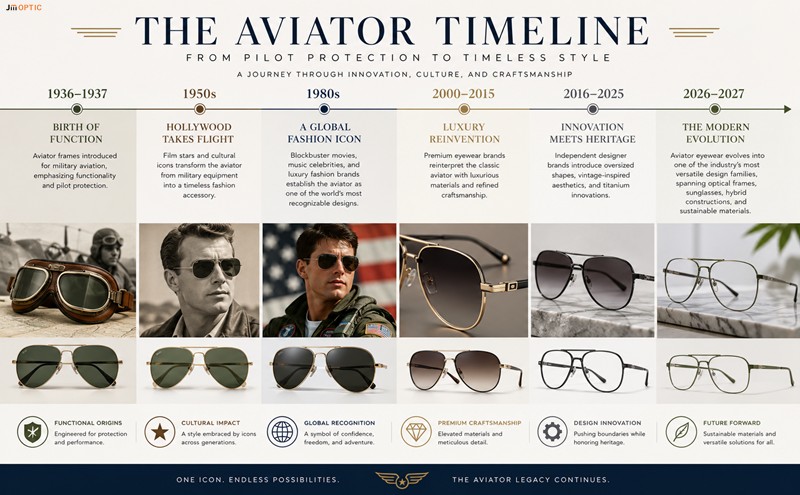
Year | Milestone |
1936–1937 | Birth of the Aviator. Originally developed for military pilots, aviator eyewear was engineered to provide superior eye protection, a wide field of vision, and lightweight comfort during flight. |
1950s | From Cockpit to Hollywood. Film stars and cultural icons transformed the aviator from military equipment into a timeless fashion accessory recognized worldwide. |
1980s | A Global Fashion Icon. Blockbuster movies, music celebrities, and luxury fashion brands established the aviator as one of the world's most recognizable sunglass designs. |
2000–2015 | Luxury Reinvention. Premium eyewear houses reinterpreted the classic aviator with handcrafted acetate, titanium, precious metals, polarized lenses, and refined detailing, elevating both aesthetics and comfort. |
2016–2025 | Innovation Meets Heritage. Independent designer brands introduced oversized silhouettes, vintage-inspired proportions, ultra-light titanium constructions, mixed-material combinations, and sustainable manufacturing concepts. |
2026–2027 | The Modern Evolution. Aviator eyewear has become one of the industry's most versatile design families, spanning optical frames, sunglasses, acetate–titanium hybrids, rimless variations, sustainable materials, smart engineering, and fashion-forward interpretations for every lifestyle. |
Industry Insight
"Today's aviator is no longer a single frame shape—it has become a design platform. Luxury brands are using the aviator silhouette to express craftsmanship, innovation, and brand identity across both optical frames and sunglasses."
Why Aviator Frames Are Growing Again
Several market forces are contributing to the renewed popularity of aviator eyewear.
- The Return of Timeless Design
Consumers increasingly favor products with lasting value over short-lived fashion trends. The aviator's heritage makes it one of the safest investments for both brands and retailers, offering broad appeal across age groups and markets.
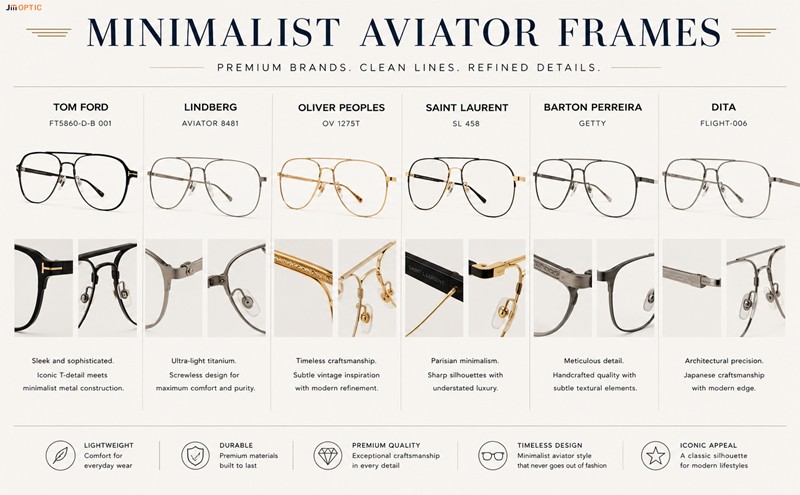
- The Rise of Luxury Minimalism
Rather than relying on oversized logos or decorative elements, many premium brands are embracing subtle luxury. Refined bridge structures, premium materials, and sophisticated finishing techniques allow aviator frames to communicate quality through design rather than branding alone.
- Material Innovation
One of the biggest changes in recent years is the expansion of material choices.
Where aviator frames were once almost exclusively made from metal, today's collections include:
- Premium acetate
- Japanese titanium
- Bio-acetate
- Stainless steel
- Acetate-metal combinations
- Titanium-acetate hybrids
These innovations allow designers to create frames that are lighter, stronger, more colorful, and better suited to different consumer preferences.
Material Trend Comparison
Material | Luxury Appeal | Weight | Design Flexibility | Trend Score (2026–2027) |
Premium Acetate | ★★★★★ | ★★★☆☆ | ★★★★★ | ⭐⭐⭐⭐⭐ |
Titanium | ★★★★★ | ★★★★★ | ★★★★☆ | ⭐⭐⭐⭐⭐ |
Stainless Steel | ★★★★☆ | ★★★★☆ | ★★★★☆ | ⭐⭐⭐⭐☆ |
Acetate + Metal | ★★★★★ | ★★★★☆ | ★★★★★ | ⭐⭐⭐⭐⭐ |
Bio-Acetate | ★★★★★ | ★★★★☆ | ★★★★★ | ⭐⭐⭐⭐⭐ |
Market Opportunity
The renewed popularity of aviator eyewear presents significant opportunities for independent eyewear brands, private label programs, distributors, and optical retailers.
Unlike highly trend-driven silhouettes that may quickly lose consumer interest, the aviator continues to evolve while retaining its instantly recognizable identity. This balance between familiarity and innovation makes it one of the most commercially resilient categories in today's eyewear market.
Brands that successfully reinterpret the aviator through premium materials, contemporary proportions, and refined craftsmanship are well positioned to meet growing global demand.
Editor's Note
Few eyewear designs have demonstrated the longevity of the aviator. What began as functional military equipment has evolved into a universal design language embraced by luxury brands, independent designers, and technical eyewear manufacturers alike. Today, the aviator is no longer defined by a single silhouette—it represents an entire family of optical and sunglass designs that balance heritage, innovation, and modern craftsmanship.
Throughout this report, we will explore how leading international brands are redefining the aviator category and how these innovations translate into practical opportunities for OEM and ODM eyewear development. Each trend chapter will examine the design direction, commercial potential, recommended materials, and manufacturing considerations, helping brands and buyers identify the most promising opportunities for the 2026–2027 market.
Coming Up Next
Chapter Two
The Top 10 Aviator Eyewear Trends Defining 2026–2027
In the next chapter, we will analyze the ten most influential aviator trends reshaping the global eyewear market—from oversized acetate aviators and titanium minimalism to double-bridge architecture, geometric reinterpretations, and luxury vintage revivals. Each trend will include real-world brand examples, design insights, commercial opportunities, recommended materials, and OEM development strategies.