
2026–2027 Global Eyewear Trend Report Part I: Aviator Eyewear – Chapter Two–The Top 10 Aviator Eyewear Trends Defining (I) – First 3
Executive Summary
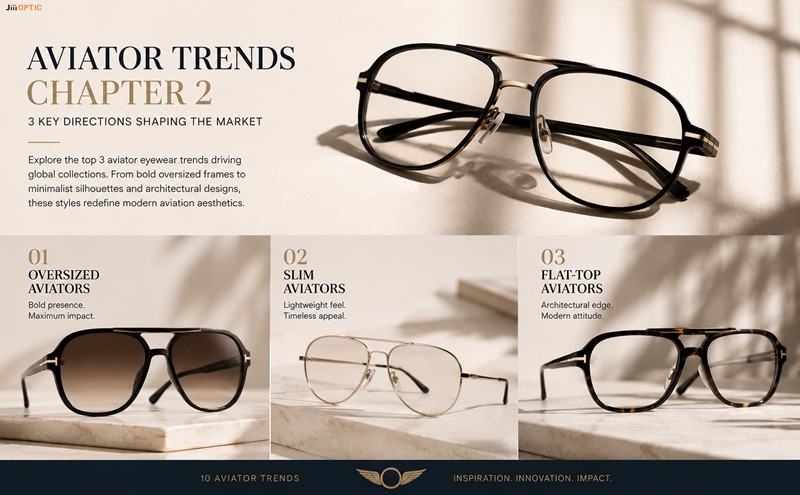
The aviator silhouette continues to evolve beyond its aviation heritage, becoming one of the most commercially versatile eyewear categories for 2026–2027. While the iconic teardrop shape remains recognizable, leading brands are redefining it through new proportions, refined construction, and premium materials.
This chapter focuses on three influential directions currently shaping the global market: Oversized Aviators, Slim Aviators, and Flat-Top Aviators. These trends reflect changing consumer preferences for individuality, lightweight comfort, and architectural design while offering valuable opportunities for eyewear brands developing new collections.
Drawing inspiration from international luxury brands and combining practical manufacturing knowledge, this report explains not only what is trending, but also why it matters commercially and how OEM partners can successfully develop these concepts into market-ready products.
Key Takeaways
✔ Oversized aviators remain one of the strongest premium fashion statements.
✔ Slim aviators reflect the growing demand for lightweight, understated luxury.
✔ Flat-top aviators combine vintage heritage with modern architectural aesthetics.
✔ Premium acetate and titanium continue to dominate new product development.
✔ Structural engineering and wearing comfort are becoming as important as visual design.
Trend Heat Index (2026–2027)
Trend | Consumer Interest | Luxury Potential | Commercial Value | OEM Opportunity |
Oversized Aviators | ⭐⭐⭐⭐⭐ | ⭐⭐⭐⭐⭐ | ⭐⭐⭐⭐⭐ | ⭐⭐⭐⭐⭐ |
Slim Aviators | ⭐⭐⭐⭐☆ | ⭐⭐⭐⭐☆ | ⭐⭐⭐⭐☆ | ⭐⭐⭐⭐☆ |
Flat-Top Aviators | ⭐⭐⭐⭐☆ | ⭐⭐⭐⭐⭐ | ⭐⭐⭐⭐☆ | ⭐⭐⭐⭐☆ |
Market Snapshot
Several market observations support the continued momentum of aviator eyewear:
- Luxury brands are expanding aviator collections beyond sunglasses into premium optical frames.
- Lightweight titanium constructions continue to gain popularity in Europe and Japan.
- Thick acetate aviators have become a signature category for many independent luxury brands.
- Consumers increasingly value timeless silhouettes enhanced with modern craftsmanship rather than short-lived fashion trends.
- Buyers are looking for collections that balance iconic styling with distinctive brand identity.
Industry Reference: Market observations are based on public product launches, international optical exhibitions (including SILMO Paris and MIDO Milano), and trend analyses from leading eyewear industry publications and market research sources
Trend Overview
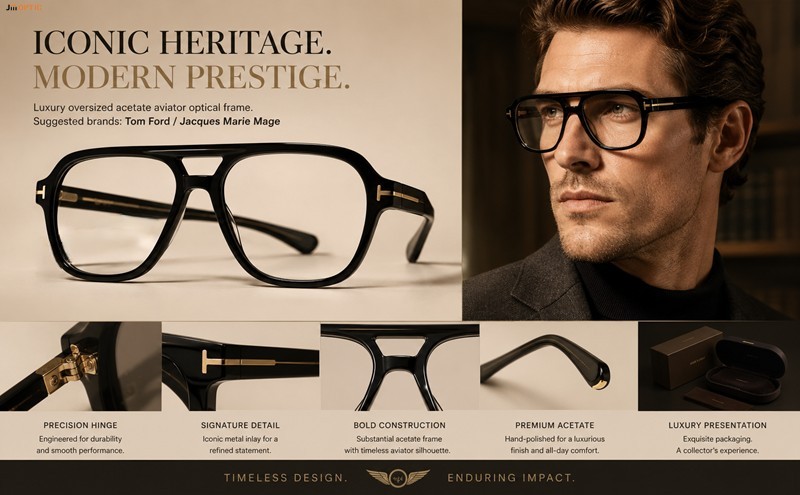
Oversized aviator frames are no longer simply a larger version of the classic pilot shape. Instead, they represent a shift toward confident design, stronger visual identity, and elevated luxury positioning.
Over the past few years, premium brands have gradually increased lens height, front width, and temple volume while maintaining clean proportions. The result is a frame that feels bold without becoming exaggerated.
Unlike fast-fashion oversized eyewear, today's luxury aviators emphasize precision, balance, and craftsmanship. Every millimeter of the frame is carefully considered to ensure the larger silhouette remains comfortable for everyday wear.
Why Is This Trend Growing?
Several factors are driving the popularity of oversized aviators.
First, consumers increasingly seek statement products that express personality while remaining timeless.
Second, oversized frames naturally complement today's relaxed tailoring and minimalist fashion, creating a stronger visual presence without relying on oversized logos.
Finally, larger frames provide designers with greater freedom to experiment with premium materials, laminated acetate, sculptural temples, and refined bridge architecture.
Brand Inspiration
Rather than copying successful products, brands can learn from the design philosophies behind leading collections.
Brand | Design Inspiration |
Ray-Ban | Timeless aviator proportions refined for broader audiences |
Tom Ford | Strong bridge architecture with luxurious finishing |
Jacques Marie Mage | Thick premium acetate construction and bold personality |
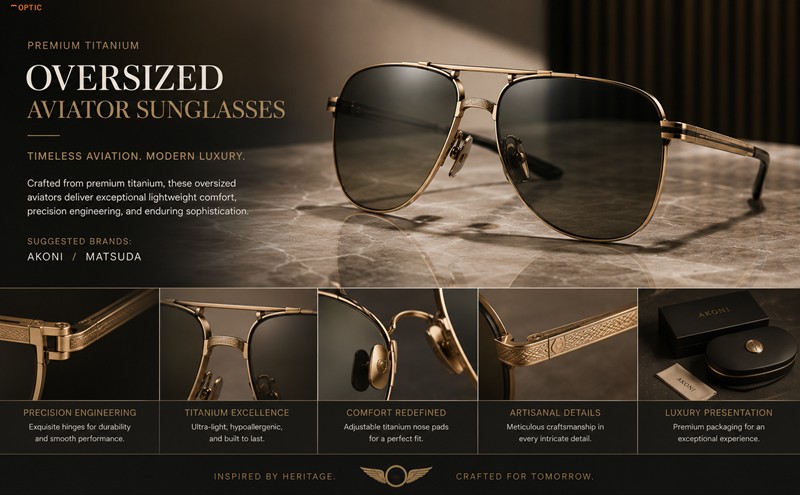
Akoni | Precision engineering combined with sophisticated luxury details |
Matsuda | Japanese craftsmanship with intricate metal components |
Design Language
Oversized aviators communicate confidence through proportion rather than decoration.
Key design characteristics include:
- Taller lenses
- Broader front profile
- Sculptural temples
- Premium surface finishing
- Rich acetate patterns
- Balanced bridge geometry
The objective is to create a frame that feels luxurious through its construction rather than excessive branding.
Manufacturing Perspective
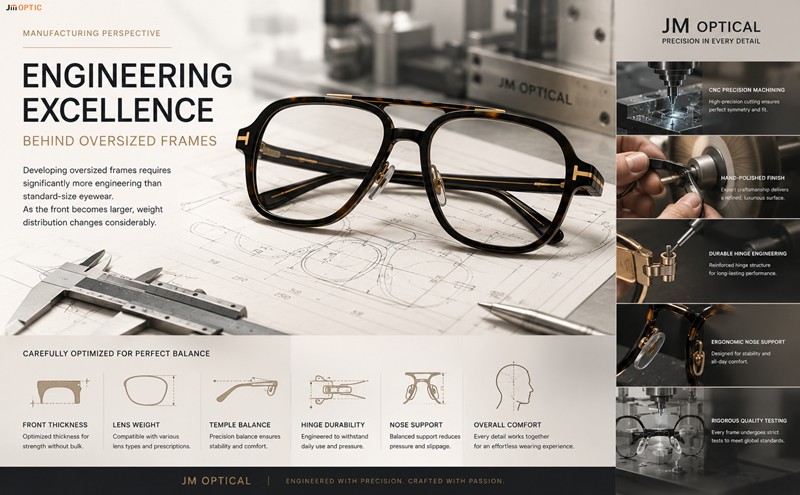
Developing oversized frames requires significantly more engineering than standard-size eyewear.
As the front becomes larger, weight distribution changes considerably.
Manufacturers must carefully optimize:
- Front thickness
- Lens weight
- Temple balance
- Hinge durability
- Nose support
- Overall wearing comfort
Poor structural design may result in excessive front weight, temple deformation, or customer discomfort after extended wear.
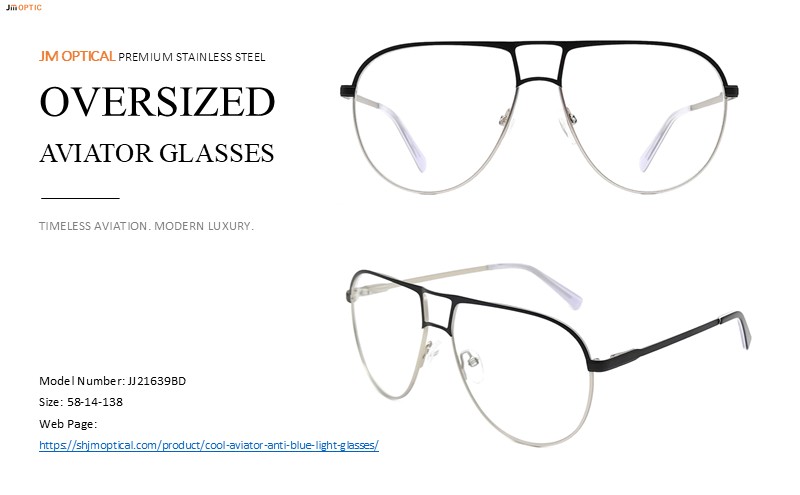
https://shjmoptical.com/product/cool-aviator-anti-blue-light-glasses/
Factory Notes
From an OEM manufacturer's perspective, oversized acetate aviators often require reinforced metal core wires and stronger hinge systems to maintain long-term stability.
For premium collections, it is also advisable to optimize temple geometry rather than simply increasing acetate thickness. This improves comfort while preserving the bold aesthetic that consumers expect.
These engineering decisions are rarely visible to end users, yet they have a significant impact on product quality, durability, and after-sales performance.
Recommended Materials
★★★★★ Premium Acetate
★★★★★ High Quality Titanium
★★★★★ Acetate + Titanium
★★★★☆ Stainless Steel
Suitable Customer Segments
✔ Premium Fashion Brands
✔ Independent Designer Brands
✔ Luxury Optical Retailers
✔ Department Store Collections
✔ Premium DTC Brands
OEM Insight
Oversized aviators present an excellent opportunity for private label development because they offer substantial room for differentiation through color combinations, laminated acetate, temple decoration, and bridge construction.
Rather than competing solely on price, brands can build stronger product identity by investing in distinctive design details and premium finishing.
Future Outlook
Oversized aviators are expected to remain one of the strongest premium eyewear categories through 2028. Growth will likely be driven by thicker acetate constructions, hybrid material combinations, and refined vintage influences.
Trend 2
Slim Aviators
Lightweight Elegance for Modern Consumers
Trend Overview
While oversized aviators continue to dominate bold fashion collections, another direction is quietly gaining momentum across premium optical markets—Slim Aviators.
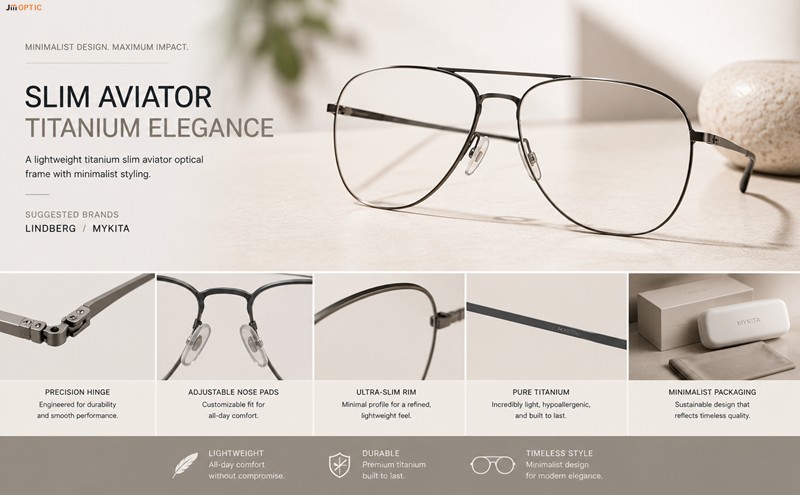
Characterized by thinner rims, refined bridge structures, lightweight construction, and understated proportions, slim aviators represent the growing influence of quiet luxury and minimalist design. Rather than making a dramatic statement, these frames communicate sophistication through precision engineering, premium materials, and exceptional wearing comfort.
Unlike the ultra-thin wire aviators popular in the early 2000s, today's slim aviators feature carefully balanced proportions. Lens shapes are slightly softened, bridge lines are cleaner, and temples often incorporate subtle sculptural details that enhance the overall premium feel.
For eyewear brands, slim aviators offer an attractive opportunity to build collections that appeal to professionals, urban consumers, and buyers seeking timeless eyewear with contemporary elegance.
Why Is This Trend Growing?
Several long-term market shifts are driving the popularity of slim aviators.
- Quiet Luxury Continues to Influence Product Design
Across fashion, watches, leather goods, and eyewear, consumers increasingly appreciate products that express quality through craftsmanship rather than oversized logos.
Slim aviators perfectly reflect this movement by emphasizing refined proportions, clean lines, and premium finishing instead of decorative elements.
- Lightweight Comfort Becomes a Purchasing Priority
Consumers who wear prescription eyewear for long hours increasingly prioritize comfort alongside aesthetics.
Titanium, beta titanium, and high-quality stainless steel enable brands to reduce frame weight while maintaining structural integrity, making slim aviators particularly attractive for all-day wear.
- Optical Frames Are Becoming Lifestyle Products
Prescription eyewear is no longer viewed solely as a medical necessity. Many consumers now own multiple frames for different occasions, encouraging demand for versatile designs that transition effortlessly between business, travel, and casual environments.
Slim aviators fit naturally into this lifestyle-oriented approach.
Market Insight
Recent product launches from premium European and Japanese eyewear brands indicate a clear movement toward slimmer metal constructions with enhanced comfort features. Rather than pursuing dramatic styling, many collections focus on precision engineering, premium materials, and understated luxury.
This trend is particularly evident in mature optical markets where long-term wearability is considered as important as visual design.
What We Can Learn from Leading Brands
Brand | Design Lesson |
LINDBERG | Minimal structures with exceptional comfort |
MYKITA | Innovative lightweight engineering |
ic! berlin | Screwless construction and technical precision |
Akoni | Premium titanium finishing with luxury detailing |
Oliver Peoples | Elegant proportions and timeless styling |
Rather than copying specific products, successful OEM development should focus on understanding why these design philosophies resonate with modern consumers.
Design Language
Slim aviators are defined by restraint rather than excess.
Key design characteristics include:
- Thin titanium or stainless-steel rims
- Narrow bridge architecture
- Fine temples with elegant tapering
- Lightweight construction
- Matte or brushed finishes
- Neutral color palette
- Balanced lens proportions
Every design element works together to reduce visual weight while enhancing perceived quality.
Manufacturing Perspective
Although slim aviators appear visually simple, they demand extremely high manufacturing precision.
Reducing material thickness leaves little tolerance for dimensional variation, making quality control significantly more demanding than with thicker acetate constructions.
Critical production considerations include:
- Rim wire consistency
- Bridge welding precision
- Temple alignment
- Surface finishing quality
- Hinge tolerance
- Lens retention accuracy
Small deviations that may be acceptable on heavier frames become immediately noticeable on minimalist designs.
Factory Notes
One common misconception is that slimmer frames are easier to manufacture because they use less material.
In reality, lightweight constructions often require higher production accuracy and tighter quality control standards.
For titanium collections in particular, consistent welding quality, precise polishing, and accurate dimensional control are essential to achieving the premium feel expected by international eyewear brands.
Recommended Materials
★★★★★ High Quality Titanium
★★★★★ Beta Titanium
★★★★☆ Stainless Steel
★★★★☆ Titanium + Acetate
Suitable Customer Segments
✔ Premium Optical Brands
✔ Professional Business Collections
✔ Scandinavian Design Brands
✔ Japanese-inspired Collections
✔ Urban Lifestyle Retailers
OEM Insight
Slim aviators create excellent opportunities for brands seeking long product life cycles.
Because minimalist designs are less dependent on seasonal fashion trends, they typically remain commercially relevant for multiple years, reducing inventory risk while strengthening long-term brand identity.
When developing these collections, brands should prioritize engineering quality, precise finishing, and wearing comfort rather than unnecessary decorative elements.
Future Outlook
Slim aviators are expected to continue expanding in premium optical markets through 2028, particularly in Europe, Japan, and North America. Demand will likely be driven by advances in lightweight materials, sustainable manufacturing, and refined industrial design.
Trend 3
Flat-Top Aviators
Architectural Lines Meet Contemporary Fashion
Trend Overview
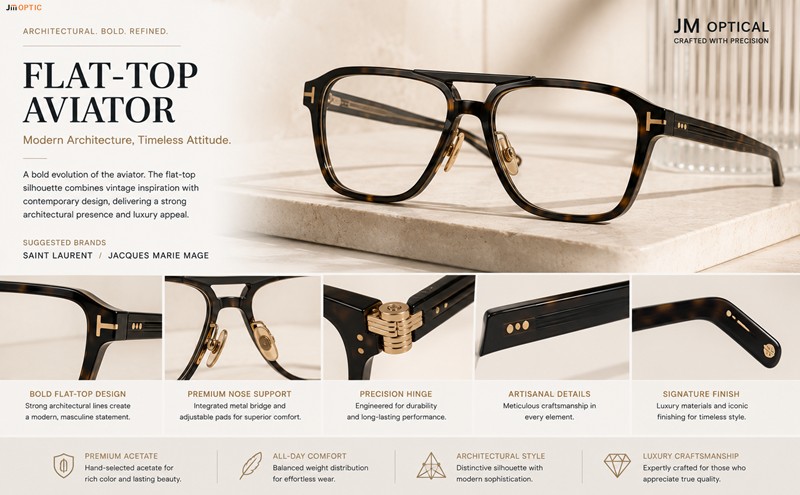
Flat-top aviators represent one of the most recognizable reinterpretations of the classic pilot silhouette. By replacing the traditional curved brow line with a strong horizontal profile, designers create a frame that feels simultaneously vintage, architectural, and distinctly modern.
This design language has become increasingly popular among luxury fashion houses and independent designer brands because it combines the familiarity of the aviator with a stronger visual identity.
Rather than appealing solely to traditional aviator enthusiasts, flat-top designs attract consumers looking for eyewear that expresses confidence, creativity, and contemporary style.
Why Is This Trend Growing?
- Stronger Visual Identity
As competition within the premium eyewear market intensifies, brands increasingly seek silhouettes that remain instantly recognizable while differentiating themselves from conventional pilot frames.
Flat-top aviators achieve this through simple yet highly effective geometric refinement.
- Architectural Design Influence
Modern industrial design increasingly emphasizes clean horizontal lines and structural clarity.
This architectural approach extends naturally into eyewear, where straight brow lines create a more confident and contemporary appearance.
- Growing Demand for Gender-Neutral Collections
Flat-top aviators appeal equally to men and women, making them highly versatile for lifestyle collections and fashion-forward retail environments.
Market Insight
Across international eyewear exhibitions, flat-top variations continue to appear in both optical and sunglass collections. Luxury brands frequently reinterpret the concept using premium acetate, titanium, or mixed-material construction, allowing the silhouette to evolve while retaining its iconic character.
For OEM manufacturers, this versatility makes flat-top aviators one of the most adaptable platforms for future product development.
What We Can Learn from Leading Brands
Brand | Design Lesson |
Saint Laurent | Fashion-driven bold proportions |
Tom Ford | Luxury bridge architecture |
DITA | Technical precision and premium detailing |
Jacques Marie Mage | Sculptural acetate construction |
Cartier | Elegant integration of metal craftsmanship |
Design Language
Flat-top aviators emphasize structure and proportion.
Typical characteristics include:
- Straight brow line
- Angular lens transitions
- Sculptural bridge design
- Double bridge variations
- Premium acetate fronts
- Hybrid material construction
- Strong geometric balance
The result is a frame that feels confident without becoming overly aggressive.
Manufacturing Perspective
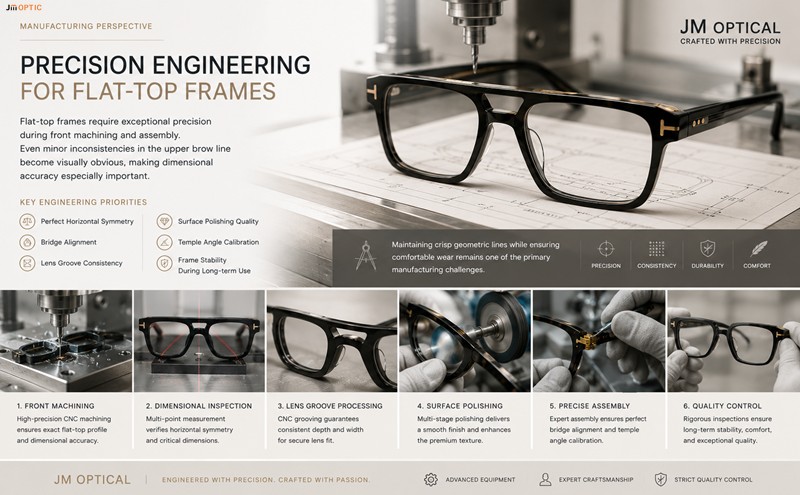
Flat-top frames require exceptional precision during front machining and assembly.
Even minor inconsistencies in the upper brow line become visually obvious, making dimensional accuracy especially important.
Key engineering priorities include:
- Perfect horizontal symmetry
- Bridge alignment
- Lens groove consistency
- Surface polishing quality
- Temple angle calibration
- Frame stability during long-term use
Maintaining crisp geometric lines while ensuring comfortable wear remains one of the primary manufacturing challenges.
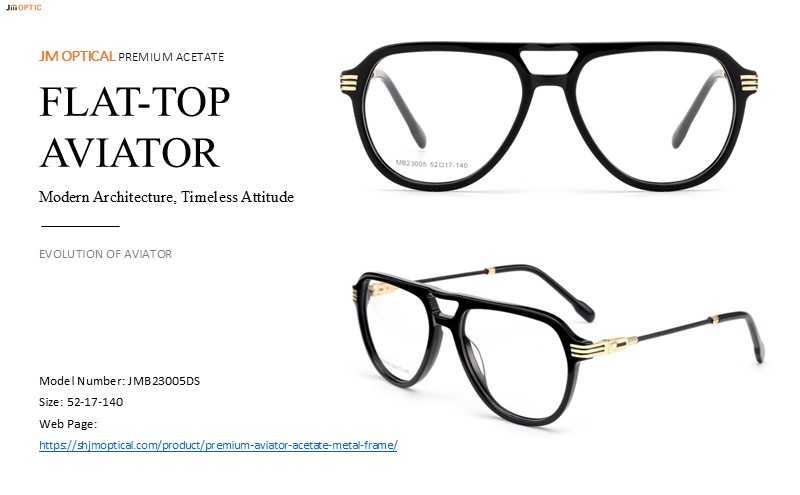
https://shjmoptical.com/product/premium-aviator-acetate-metal-frame/
Factory Notes
From an OEM perspective, flat-top aviators often require additional attention during CNC machining and hand-finishing.
Sharp architectural lines should remain clean and well-defined, but excessive edge sharpness can reduce wearing comfort. Achieving the right balance between aesthetics and ergonomics is one of the defining characteristics of premium manufacturing.
Recommended Materials
★★★★★ Premium Acetate
★★★★★ Titanium + Acetate
★★★★☆ Japanese Titanium
★★★★☆ Stainless Steel
Suitable Customer Segments
✔ Luxury Fashion Brands
✔ Designer Eyewear Labels
✔ Boutique Optical Retailers
✔ Lifestyle Collections
✔ Premium Private Label Programs
OEM Insight
Flat-top aviators provide excellent opportunities for product differentiation because the silhouette allows brands to express their own design language through bridge architecture, temple detailing, material combinations, and color development.
Instead of relying on excessive decoration, successful collections typically focus on refined proportions, premium craftsmanship, and carefully balanced structural engineering.
Future Outlook
Flat-top aviators are expected to remain a strong premium category through at least 2028. Future developments will likely include thinner titanium constructions, sustainable bio-acetate options, laminated color combinations, and more sophisticated mixed-material engineering.
Editor's Summary
The first three trends—Oversized Aviators, Slim Aviators, and Flat-Top Aviators—highlight three distinct directions within today's aviator market. Rather than competing with one another, they address different consumer preferences and brand positioning strategies.
Commercial Potential of Aviator Trends (2026–2027)
Editorial assessment of OEM and market opportunities for the first three aviator trends.
Trend | Best Positioning | Recommended Materials | OEM Development Priority |
Oversized Aviators | Premium Fashion & Statement Collections | Premium Acetate, Titanium | ★★★★★ |
Slim Aviators | Professional, Business & Minimalist Collections | Titanium, Beta Titanium | ★★★★☆ |
Flat-Top Aviators | Luxury Fashion & Designer Collections | Acetate, Titanium Hybrid | ★★★★★ |
JM Optical Perspective
For eyewear brands planning their 2026–2027 collections, these three trends should not be viewed as isolated products but as complementary design platforms. A well-balanced aviator collection can combine a bold oversized model, a lightweight slim model, and a fashion-forward flat-top model to serve different customer segments while maintaining a consistent brand identity. From an OEM perspective, success lies not in copying existing products but in translating these trend directions into commercially viable collections through thoughtful design, appropriate material selection, precise engineering, and reliable manufacturing quality—the areas where an experienced manufacturing partner can create long-term value for a brand.
← Charter 1: 2026–2027 Aviator Eyewear Trends Chapter One — The Evolution of an Icon